 sales@coolienergy.com
  +86 136 0007 2798

If you’ve been shopping for a solar or backup power system in Kinshasa, you’ve almost certainly heard the term LiFePO4 — lithium iron phosphate. Sellers on Avenue du Commerce or in Limete promise “10 years,” “6,000 cycles,” or “lasts forever.” But what does that actually mean for a household dealing with daily SNEL load-shedding, tropical heat, and unstable grid voltage? This guide breaks down the real lifespan of LiFePO4 batteries, the factors that make them last longer (or die early), and what to look for before you buy — with the realities of the Kinshasa market built in.
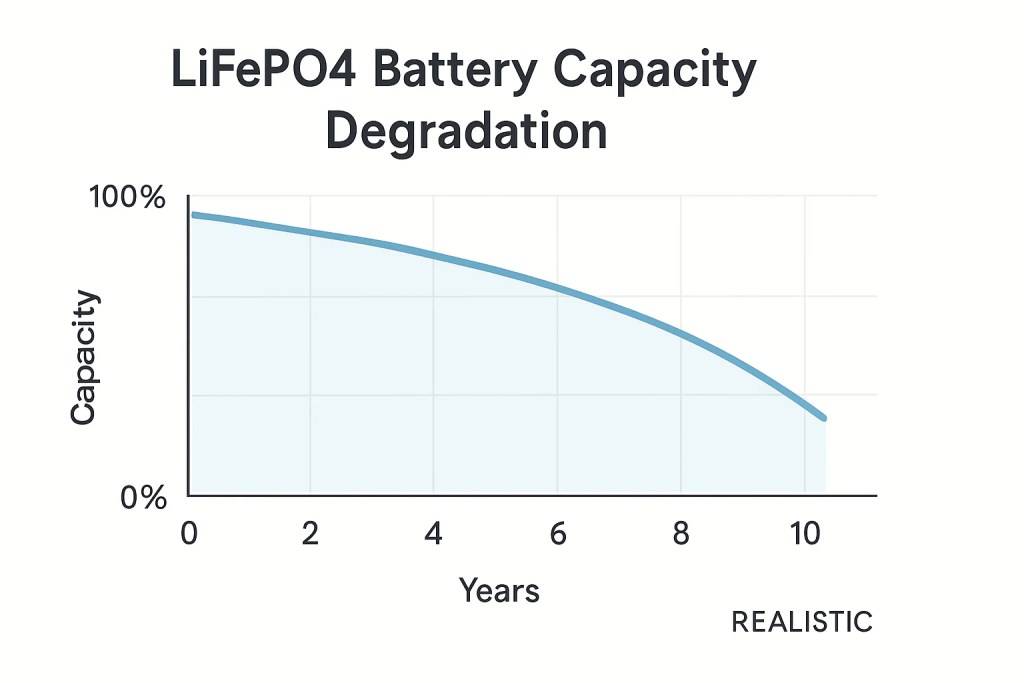
Table of Contents
Key Takeaways (Read This First)
- Cycle life: A quality LiFePO4 battery typically delivers 3,000–6,000 full charge cycles before dropping to 80% of its original capacity — far more than lead-acid (300–500 cycles) or standard lithium-ion (500–1,000 cycles).
- Calendar life: Even sitting unused, LiFePO4 cells are rated for 10–15 years of service life under normal conditions.
- Real-world Kinshasa lifespan: Given daily partial cycling from SNEL outages, most households can expect 8–12 years of reliable service from a well-managed LiFePO4 system — sometimes less if heat and charge habits aren’t managed.
- Heat is the #1 lifespan killer in a climate like Kinshasa’s, more than cycle count.
- A good BMS (Battery Management System) matters more than the sticker cycle-life number.
What Makes LiFePO4 Different (and Why It Matters Here)
Lithium iron phosphate is a lithium-ion chemistry, but with a more thermally stable cathode than the NMC (nickel-manganese-cobalt) chemistry found in phones and some cheaper power banks sold locally. This stability is precisely why LiFePO4 has become the standard for home solar battery storage in Kinshasa: it tolerates heat better, resists thermal runaway (a real safety concern given how many storage rooms in Kinshasa homes sit under a hot tin roof), and doesn’t degrade quickly from the constant partial charging and discharging that comes with daily load-shedding cycles.
Lead-acid batteries — still common with generator-and-inverter setups across Kinshasa — degrade fast when regularly discharged below 50%. LiFePO4 batteries can be discharged to 80–90% depth of discharge (DoD) repeatedly without significant damage, which is exactly the usage pattern that Kinshasa’s unreliable grid forces on households.
The Real Numbers: Cycle Life vs. Calendar Life
Two separate clocks are running on any battery, and confusing them is the most common mistake buyers make.
Cycle life is how many full charge/discharge cycles the battery can handle before capacity fades to about 80%. For LiFePO4, manufacturers commonly rate this at:
- Budget/unbranded cells: 2,000–3,000 cycles
- Mid-tier branded cells (common at Kinshasa solar shops): 4,000–5,000 cycles
- Premium cells with a strong BMS: 6,000–10,000 cycles
Calendar life is how long the battery lasts in years regardless of use, due to slow internal chemical aging. LiFePO4 is generally rated 10–15 years, sometimes up to 20 with light use and good temperature control.
For a Kinshasa household cycling the battery once a day (charging during sun hours or grid availability, discharging overnight or during SNEL cuts), a 4,000-cycle battery running one cycle per day translates to roughly 11 years before hitting 80% capacity — assuming temperature and charging conditions are kept in a healthy range. In practice, many Kinshasa homes cycle a battery only partially (topping up between outages rather than doing one clean full cycle), which actually extends real-world lifespan beyond the simple math, since partial cycles are gentler on the cells than deep full cycles.
The Four Factors That Actually Determine Lifespan
1. Temperature — the biggest factor in Kinshasa’s climate. LiFePO4 cells are rated for a wide operating range, but ideal performance sits around 15–35°C. Kinshasa’s ambient temperatures regularly exceed 30°C, and storage rooms with poor ventilation, direct sun exposure, or proximity to a hot inverter can push internal battery temperature well beyond the ideal range. Every 10°C of sustained excess heat can roughly cut a lithium battery’s usable life in half. Install the battery in a shaded, ventilated room — never directly under a metal roof or in direct sunlight, and never sealed in an airtight cabinet.
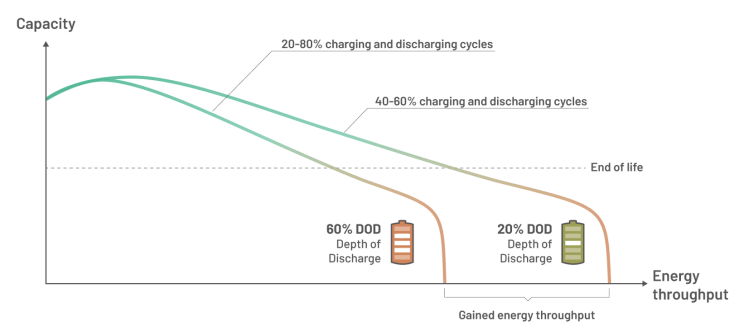
2. Depth of Discharge (DoD). Regularly draining a LiFePO4 battery to 100% DoD ages it faster than keeping cycles in the 20–90% range. For Kinshasa users relying on the battery to bridge SNEL outages, setting the inverter/BMS low-voltage cutoff at around 10–20% remaining capacity (rather than letting it hit zero) meaningfully extends lifespan.
3. Charge rate and charging habits. Fast-charging generates more heat and stresses the cells. If your solar setup or generator allows a moderate charge rate rather than the fastest possible, the battery will age more slowly. This matters for households pairing a battery with a generator top-up during long outages — a slow, steady charge is healthier than a rapid boost charge.
4. Quality of the BMS. The Battery Management System is the “brain” protecting the pack from overcharge, over-discharge, short circuits, and cell imbalance. A cheap or missing BMS is the single most common reason unbranded batteries sold in Kinshasa markets fail within 2–3 years despite LiFePO4 chemistry theoretically lasting a decade or more. Always ask the vendor which BMS brand is used and whether it has over-temperature protection — this single question filters out most low-quality imports.
LiFePO4 vs. Alternatives for the Kinshasa Market
| Battery Type | Typical Cycle Life | Heat Tolerance | Upfront Cost (Kinshasa market) | Cost per Year (10-yr use) |
|---|---|---|---|---|
| Lead-acid (flooded/AGM) | 300–500 | Poor in heat | Lower ($) | Higher long-term |
| Standard Li-ion (NMC) | 500–1,000 | Moderate, heat risk | Mid | Mid |
| LiFePO4 | 3,000–6,000+ | Good | Higher upfront ($$–$$$, often USD-priced) | Lowest long-term |
Because most LiFePO4 batteries and solar components in Kinshasa are priced in USD (with the local Congolese Franc, FC, fluctuating), the upfront cost can feel steep. But when spread across the realistic 8–12 year lifespan discussed above, the cost per year of backup power is typically far lower than repeatedly replacing lead-acid batteries every 1.5–2 years — a cycle many Kinshasa households are already familiar with and tired of.

Practical Tips to Maximize Your LiFePO4 Battery’s Life in Kinshasa
- Location: Install in a shaded, ventilated indoor space — avoid rooftop enclosures or rooms that trap heat.
- Avoid full drains: Set cutoffs so the battery rarely reaches 0%.
- Moderate charging: Avoid oversized fast chargers where possible.
- Buy from vendors who disclose BMS specs: Ask specifically about brand, cell source, and warranty terms (look for at least a 3–5 year warranty as a quality signal).
- Size the system correctly: Undersized batteries forced into constant deep cycling age faster — sizing for your real daily load (factoring in typical SNEL outage duration in your commune) protects the investment.
- Keep firmware/BMS settings correct: If your inverter allows configuring DoD limits, set them conservatively rather than at the manufacturer’s absolute maximum.
Frequently Asked Questions
Does a LiFePO4 battery need maintenance? Very little — no watering or terminal cleaning like lead-acid. Periodic visual inspection and keeping connections dust-free (relevant given Kinshasa’s dust during the dry season) is generally sufficient.
Can I use a LiFePO4 battery with an existing lead-acid inverter setup? Often yes, but the inverter’s charge settings usually need reconfiguration for lithium chemistry. A local installer familiar with hybrid solar systems should confirm compatibility before switching.
Will heat void my warranty? Extreme heat exposure can shorten life even within warranty terms if a vendor’s terms exclude damage from improper installation — always ask about installation requirements explicitly before buying.
Conclusion
A quality LiFePO4 battery, properly installed and used, can realistically deliver 8–12+ years of dependable backup power for a Kinshasa household — turning daily SNEL outages from a disruption into a non-event. The chemistry itself is not the limiting factor; heat management, discharge habits, and BMS quality are what separate a battery that lasts a decade from one that fails in two years. Before buying, prioritize documented BMS quality and warranty terms over the flashiest cycle-life number on the box.


