 sales@coolienergy.com
  +86 136 0007 2798

The global demand for residential energy storage continues to grow in 2026 as homeowners look for reliable backup power and lower electricity bills. Among the most discussed brands are Huawei, BYD, and Sungrow, each offering advanced battery storage solutions for modern homes.
If you’re planning to install a solar battery system, understanding the differences between these brands can help you make a smarter investment.
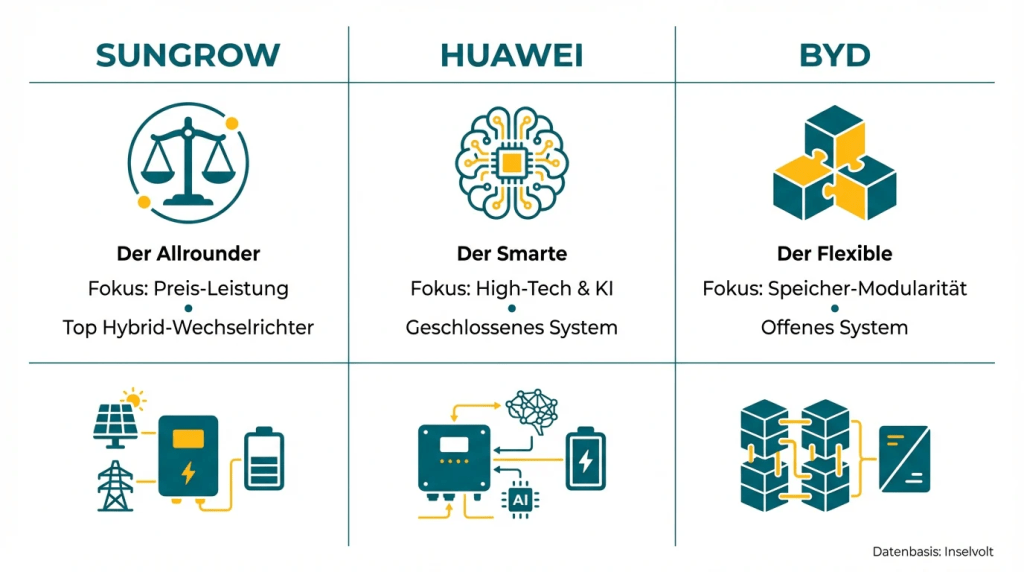
Table of Contents
Huawei Battery Storage: Smart Technology for Modern Homes
Huawei has expanded its smart energy business with integrated battery storage and hybrid inverter solutions. Its systems are designed to work seamlessly with solar panels and intelligent energy management platforms.
Advantages
- Advanced AI energy management
- Excellent inverter efficiency
- Remote monitoring through mobile apps
- Compact and modern design
Huawei systems are ideal for homeowners who want a fully connected smart energy ecosystem.
BYD Home Battery: Trusted LiFePO4 Technology
BYD is one of the world’s largest battery manufacturers and a leader in LiFePO4 home battery technology. The company’s Battery-Box series is widely used in residential and commercial energy storage projects worldwide.
Advantages
- High safety standards
- More than 6,000 life cycles
- Modular capacity expansion
- Excellent global reputation
For families looking for long-term durability, BYD remains one of the safest choices.
Sungrow Energy Storage: Value Meets Performance
Sungrow is well known for its solar inverters and has become a major player in home energy storage. Its hybrid systems offer reliable performance while remaining competitively priced.
Advantages
- Affordable pricing
- Stable inverter technology
- Easy solar integration
- Suitable for residential and small business applications
For budget-conscious homeowners, Sungrow provides strong value without sacrificing reliability.
Huawei vs BYD Battery Storage: Which Performs Better?
Many buyers compare Huawei vs BYD battery storage before making a decision.
Huawei focuses on intelligent system management and seamless integration with smart homes, while BYD emphasizes battery quality and long service life.
If battery longevity is your highest priority, BYD may be the better option. If you prefer advanced monitoring and digital energy management, Huawei offers a more intelligent solution.
How to Choose the Best Home Energy Storage Brand in 2026
Instead of selecting a brand based only on popularity, consider the following factors:
- Daily electricity consumption
- Battery capacity (kWh)
- Cycle life
- Warranty coverage
- Hybrid inverter compatibility
- Local installation and technical support
- Future expansion capability
The best home energy storage brand is the one that matches your home’s actual energy needs and budget.
Final Thoughts
There is no universal winner among Huawei, BYD, and Sungrow. Each brand has unique strengths that suit different households.
Huawei excels in smart energy management, BYD leads in battery technology, and Sungrow offers excellent value for money. Before investing, compare not only the brand but also system design, local service, and long-term operating costs to achieve the best return on investment.


