 sales@coolienergy.com
  +86 136 0007 2798

You can extend your LiFePO4 solar battery’s lifespan by avoiding extreme temperatures, keeping it within a moderate state-of-charge range, and scheduling regular maintenance checks. These habits can add years of usable life to your system.
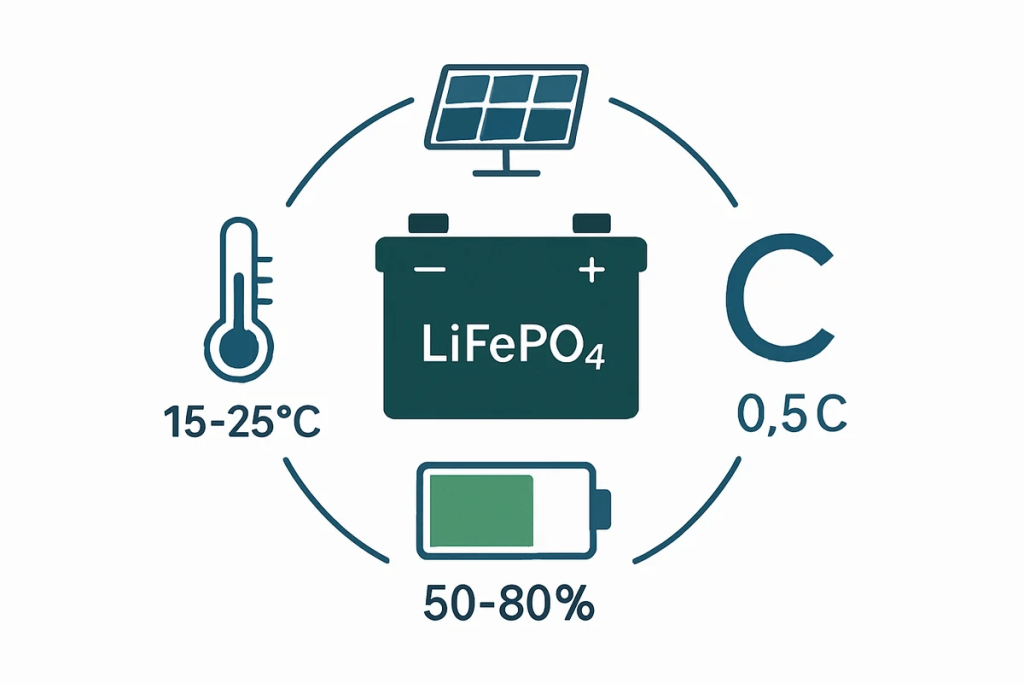
Table of Contents
Why Does Battery Lifespan Matter So Much for Solar Systems?
A solar battery is one of the most expensive components in a home solar setup, often costing thousands of dollars. Unlike panels, which can last 25+ years with minimal degradation, batteries have a finite number of charge cycles before their capacity noticeably declines.
LiFePO4 (lithium iron phosphate) batteries are popular precisely because they last longer than older lithium-ion or lead-acid alternatives — typically rated for 4,000 to 6,000+ cycles. But that rating assumes reasonable operating conditions. Poor charging habits, heat exposure, or neglect can cut years off a battery’s real-world lifespan, even if it’s technically still “working.” Getting the most out of your investment means understanding what actually accelerates wear — and what slows it down.
Common Factors That Shorten Battery Lifespan
1. Frequent deep discharges Repeatedly draining a battery close to 0% puts more stress on its cells than partial cycles do. Over time, this accelerates capacity fade.
2. Charging to 100% too often Keeping a battery constantly topped off at full charge, especially in warm conditions, can gradually degrade its internal chemistry faster than keeping it in a more moderate range.
3. Heat exposure High ambient temperatures speed up the chemical reactions inside a battery, which shortens its usable life. Batteries installed in garages, direct sunlight, or poorly ventilated enclosures tend to degrade faster.
4. Cold without protection While cold doesn’t damage LiFePO4 cells the way heat does, charging a battery in near-freezing conditions without built-in temperature protection can cause long-term harm if the BMS doesn’t prevent it.
5. Inconsistent or infrequent monitoring Without regular check-ins, small issues — a failing cell, a miscalibrated BMS, a loose connection — can go unnoticed until they cause bigger problems.
6. Poor system sizing A battery that’s undersized for the home’s daily load gets cycled harder and more often than one that’s appropriately matched to consumption, wearing it out faster.
Best Practices to Maximize Battery Life
- Stay within a 10–90% state-of-charge range for daily use when possible. Reserve full 0–100% cycles for occasions that actually require the extra capacity.
- Install the battery in a temperature-moderate location. Avoid direct sun, unventilated sheds, or spaces prone to freezing without climate control.
- Let the BMS do its job. Don’t override or disable manufacturer-set charge/discharge limits unless you fully understand the tradeoffs.
- Check system performance seasonally. Compare current capacity against the original specs to catch gradual decline early.
- Keep firmware and BMS software updated, since manufacturers often release improvements to charging algorithms that reduce long-term wear.
- Size your system with headroom. A battery sized for slightly more than your current daily use will cycle less aggressively and last longer.
- Work with a qualified installer for annual inspections, especially for connections, terminals, and ventilation, which are easy to overlook but important for long-term reliability.
FAQ
Q: Is it bad to charge a LiFePO4 battery to 100% every day? Occasional full charges are fine, but doing it daily — especially combined with heat — can accelerate capacity fade slightly faster than keeping the battery in a moderate range most of the time.
Q: Does depth of discharge really make a big difference in lifespan? Yes. Shallower, more frequent cycles generally put less cumulative stress on the battery than deep discharges, which is why many manufacturers recommend avoiding routine 0% discharges.
Q: How do I know if my battery is degrading faster than expected? Compare your battery’s usable capacity now against its rated capacity when new. A drop of more than 20% well before the expected cycle count is a sign worth investigating with your installer.
Q: Can I do anything to protect my battery in extreme climates? Yes — insulated enclosures, shaded installation locations, and battery models with built-in heating or cooling elements can meaningfully offset the effects of extreme heat or cold.
Conclusion
A LiFePO4 battery’s lifespan isn’t fixed — it’s shaped by daily habits like charge range, temperature exposure, and system sizing. Small adjustments, like avoiding unnecessary full discharges and keeping the battery in a temperature-stable space, can add real years to your system’s usable life. If you’re unsure how your battery is performing against its rated specs, consider having a solar technician run a capacity check at your next maintenance visit.


